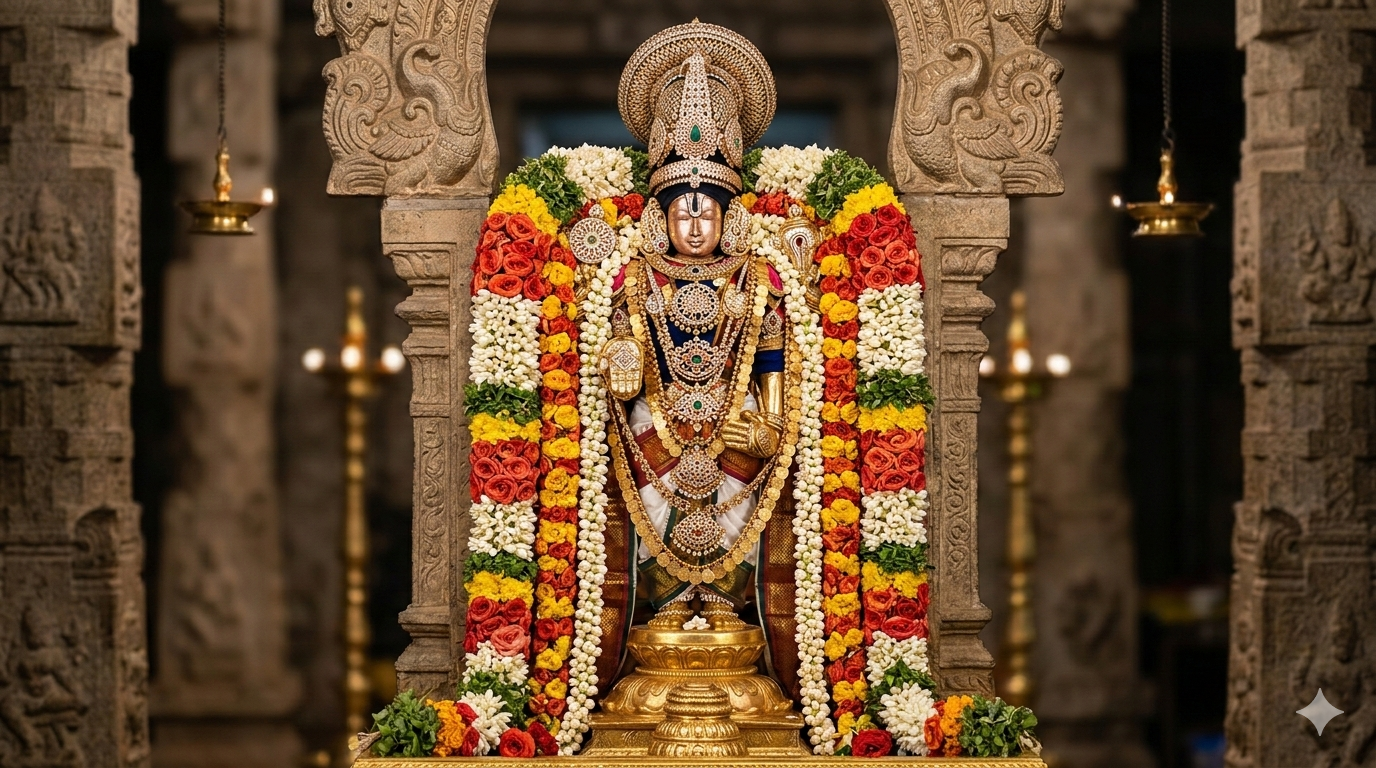
Sacred tradition proclaims that the Sri Krishna of Dwapara Yuga is none other than Sri Venkateswara, who now blesses devotees in Kali Yuga from the holy hills of Tirumala. This divine continuity is not merely belief; it lives and breathes in the daily rituals of the temple.
Every dawn, during the sacred Suprabhata Seva, the Lord is awakened with the melodious chant “Uttishthottishtha Govinda.” As though remembering His Dwapara past, Srinivasa symbolically partakes of butter and cow’s milk. The butter offered during this ritual is later distributed to devotees as prasadam — a tender reminder of the child Krishna who delighted in butter.
Within the sanctified precincts of Ananda Nilayam reside silver idols of Rukmini and Sri Krishna, approximately two feet in height. The enchanting form of Bala Krishna stands gracefully on one leg, holding a lump of butter in His right hand, captured in a gentle dance posture. Though not worshipped daily with elaborate rituals, these divine forms receive offerings along with the other deities in the sanctum. On special occasions, however, Rukmini and Krishna are worshipped with particular devotion and taken in ceremonial processions.
On every Rohini star day — the birth star of Sri Krishna — a private abhishekam is performed after Suprabhata Seva. That evening, beneath the glow of a thousand lamps, the Lord receives the Oonjal Seva. He is then taken in procession through the sacred streets of Tirumala, allowing devotees to behold Him in intimate splendor.
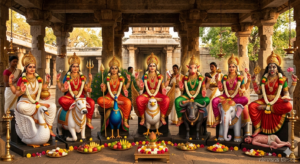
During the full moon of Chaitra month, in the Vasantha Mandapam, the annual Vasanthotsavam is celebrated for Sri Malayappa Swami with Sridevi and Bhudevi, along with Sri Sita Rama Lakshmana and Rukmini Krishna. The air fills with fragrance, music, and devotion as the divine forms radiate grace.
On the sacred night of Krishna Ashtami in the month of Sravana, after Tomala Seva, Ugra Srinivasa with Sridevi and Bhudevi is placed upon the sacred bathing pedestal. Nearby, Sri Krishna is positioned facing east, and a private abhishekam is conducted behind drawn curtains by the archakas and acharya purushas. In earlier times, this ritual included twelve repetitions of the Dvadasakshari mantra, giving rise to the name Dvadasa Tiruvaradhana — a name that continues even today.
After the sacred bath, Ugra Srinivasa returns to Ananda Nilayam, while Sri Krishna is adorned in a reclining posture near the Bangaru Vakili. The Jeeyars recite the Divya Prabandham, and scholars read the Krishna avatara episode from the Srimad Bhagavatam. Akshata is offered, and the atmosphere turns deeply contemplative. It is not merely ritual — it is remembrance.
At dawn the following day, Sri Krishna receives Taila Kappu — the ceremonial anointing with sesame oil. He is taken in procession along the Maha Pradakshina path, and the remaining sacred oil is distributed to devotees. They apply it reverently upon their heads, cherishing it as divine blessing.
Later that afternoon, Sri Malayappa Swami and Sri Krishna are seated on separate palanquins, adorned in full regalia, and taken to the floral mandapam near the sacred well for Asthanam and offerings. They then participate in the joyful Utla Utsavam.
On the day of Kanuma, Sri Krishna joins Lord Venkateswara in the Paruveta Utsavam. He visits the Golla Mandapam, receives special worship, and symbolically partakes of butter, milk, and fruits — honoring the cowherd community known as the Sannidhi Gollas, who continue to serve the Lord.
During the annual Brahmotsavam, on the fifth morning, Malayappa Swami appears in the enchanting Mohini form. Alongside, on another palanquin, Sri Krishna is taken in procession — one form divine enchantress, the other eternal charmer. Together they captivate hearts, reminding devotees that all divine manifestations belong to the One Supreme.
In the sacred month of Dhanurmasa, for thirty days, it is the butter-holding Krishna who receives the privilege of Ekanta Seva in place of Bhoga Srinivasa. There is no Suprabhata recitation during this period. Instead, the Lord is awakened with the Tiruppavai hymns composed by Goda Devi. He is bathed in warm water and offered milk, butter, and steaming pongal. The atmosphere becomes tender, intimate, almost maternal — as though the temple itself cradles the Divine Child.
Thus, in Tirumala, the story of Krishna never ends. It flows gently into the worship of Venkateswara, reminding devotees that the Lord who stole butter in Gokulam now resides upon the Seven Hills, stealing hearts instead.
May the grace of the Lord of the Seven Hills ever shine upon us.
Govinda. Govinda. Govinda.
How did this article make you feel? ఈ కథనం మీకు ఎలా అనిపించింది?