What Should Be Done… What Should Not Be Done: Sacred Worship Guidelines, Tradition, and Spiritual Balance for Householders
In Indian culture, worship is not merely a ritual — it is a way of life. The reverence of divine forms within the home is regarded as a sacred responsibility, deeply woven into the rhythm of daily living. However, according to tradition, there are certain guidelines and subtle disciplines regarding which divine forms should be kept at home and how they should be worshipped. These principles are not meant to create fear, but to preserve spiritual harmony, peace, and auspiciousness within the household.
Mindfulness in Choosing Idols and Sacred Images
When placing divine idols or images at home, their form, size, and placement carry spiritual significance. Tradition suggests that powerful forms such as Panchamukha Hanuman should ideally be worshipped in a dedicated prayer room. In homes without a separate sacred space, it is considered more appropriate to worship simpler, gentle forms.
Similarly, Surya Deva, the Sun God, is regarded as a directly visible deity who blesses all creation through his daily presence. Instead of placing his idol indoors, offering prayers to him during sunrise is considered more spiritually aligned with tradition.
The same principle applies to Lord Narasimha. Fierce forms representing intense cosmic energy are generally avoided in household worship, while benevolent forms such as Lakshmi Narasimha, Yoga Narasimha, or the compassionate Narasimha blessing Prahlada are considered suitable, as they radiate protection and peace.
In the case of Lord Krishna, gentle and serene forms, especially smaller idols or images, are preferred within homes, as they embody divine grace in a form that harmonizes naturally with domestic life.
The Sanctity of the Prayer Space
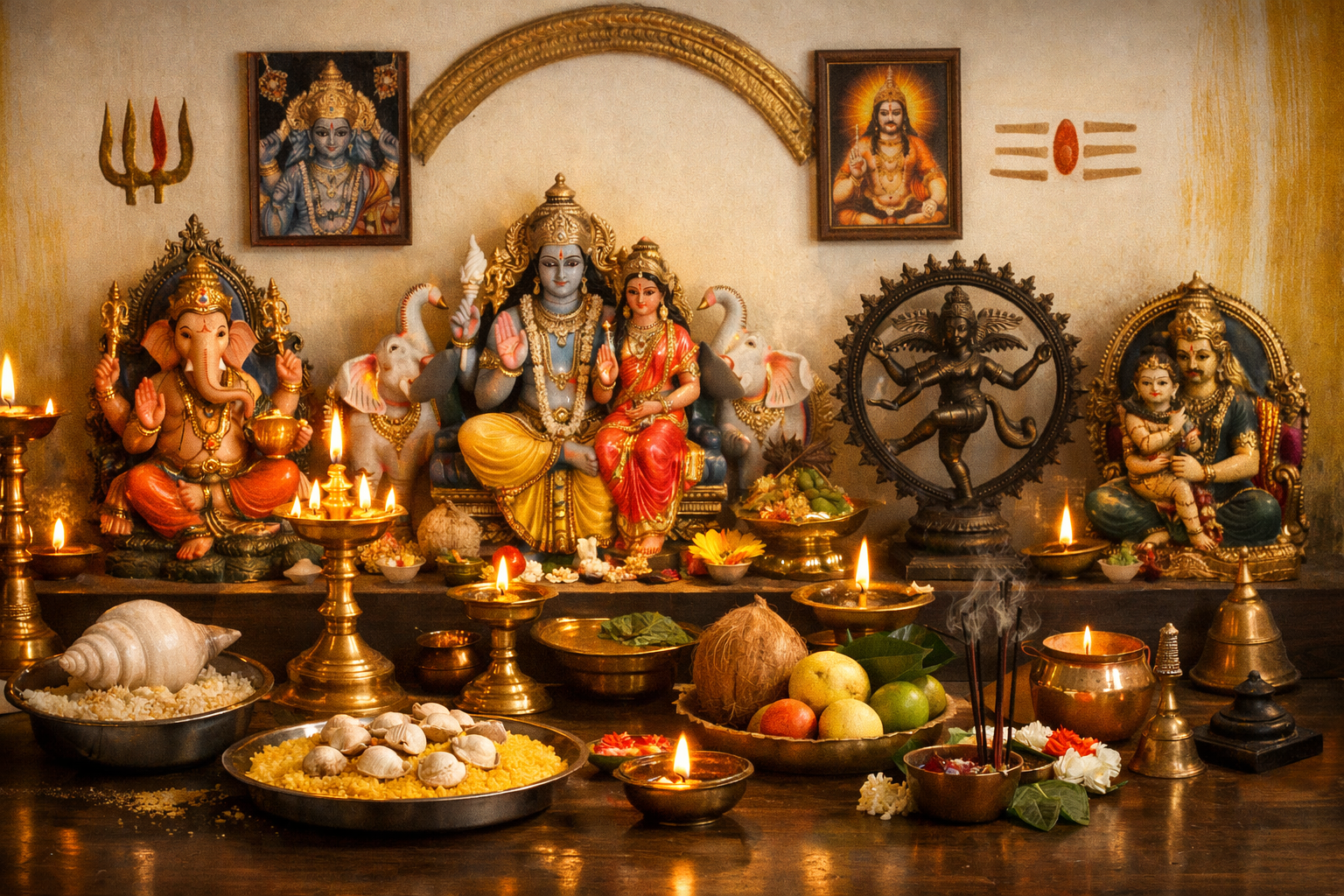
The prayer room represents the spiritual heart of the home. Maintaining its purity, cleanliness, and sacred atmosphere is essential. An ancient custom involves placing sea shells in a bowl of rice before the idol of Goddess Lakshmi. Emerging from the cosmic ocean herself, Lakshmi is symbolically associated with these shells, which are believed to invite prosperity and shield the home from negative influences.
Traditional markings on the walls of the prayer space, such as Vaishnava tilak, Shaiva tripundra, or Shakti tilak applied with turmeric, are not merely decorative but serve as sacred symbols that strengthen spiritual vibrations within the home.
Idol Size and the Discipline of Worship
Smaller idols are considered ideal for household worship, as they can be honored daily with simplicity and devotion. Larger idols, on the other hand, traditionally require more elaborate rituals, including regular offerings and periodic ceremonial bathing (abhishekam). The presence of an idol signifies an invitation to the divine, and tradition emphasizes that such presence should be honored with consistent reverence.
For Lord Ganesha, idols with the trunk turned toward the left are traditionally preferred in homes, as they symbolize calmness and accessibility of divine grace. Likewise, Goddess Lakshmi is ideally worshipped in her seated form, representing stability and the enduring presence of prosperity.
The Sacred Role of the Lamp
Lighting a lamp is one of the most profound spiritual acts in Hindu worship. The flame represents divine consciousness and the removal of inner darkness. Different oils are believed to carry symbolic significance — coconut oil is associated with relief from burdens, castor oil with harmony within the family, and sesame oil with protection from obstacles and negative influences.
Regardless of the oil used, the deeper essence of lighting a lamp lies in invoking divine presence and cultivating inner clarity.
Reverence Within Temples and Sacred Conduct
Temple traditions emphasize humility and respect. Sacred spaces such as the bali peetha are not meant to be touched casually, as they hold ritual significance. Similarly, offering prayers with devotion and quiet reverence preserves the sanctity of the experience.
These practices remind devotees that spirituality is not only about external rituals but also about cultivating inner awareness and respect.
Food, Hospitality, and Spiritual Living
Food offered to the divine becomes prasadam — a sacred blessing meant to be received with gratitude. Sharing food, especially with guests, is regarded as a noble act of dharma. Hospitality reflects the spiritual truth that divinity resides in all beings.
Traditional offerings such as tamarind rice are believed to balance energies within the household when prepared and shared with devotion.
Burning sambrani (sacred resin incense) within the home is another ancient practice believed to purify the environment and uplift spiritual vibrations.
Personal Discipline and Spiritual Practice
Spiritual discipline extends to personal practices such as meditation and mantra chanting. Using prayer beads with reverence and maintaining their sanctity reflects respect for the spiritual journey itself.
These practices are not mere formalities — they are tools that help align the mind, body, and spirit with higher consciousness.
The Deeper Purpose Behind These Traditions
These guidelines were not created to impose restrictions, but to cultivate awareness, discipline, and harmony. They represent a refined understanding of how sacred energy interacts with human life and living spaces.
At its core, worship is not defined by complexity, but by sincerity. Devotion, consistency, and inner purity are the true foundations of spiritual life.
When a householder embraces these timeless principles with understanding and faith, the home transforms into more than a dwelling — it becomes a sacred sanctuary filled with peace, prosperity, and divine presence.
This is the essence of Indian spiritual tradition: a path where devotion elevates everyday life into a living expression of the sacred.
How did this article make you feel? ఈ కథనం మీకు ఎలా అనిపించింది?